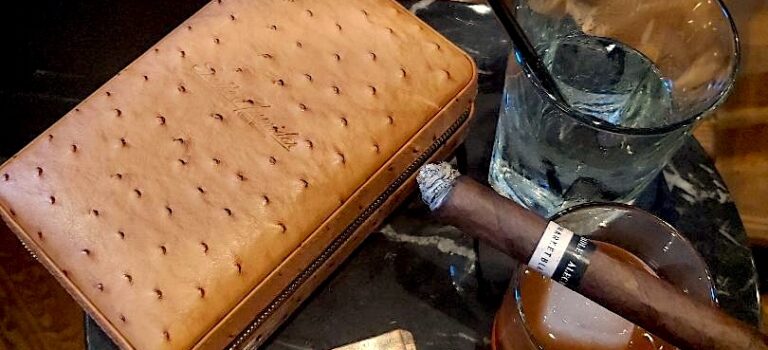
Some of the strongest relationships in my life began over a cigar. Twelve years, hundreds of miles and some of life’s hardest moments later, I’ve begun to understand why.
I met Jeff in a cigar shop that doesn’t exist anymore.
It was called SOMA.
More than twelve years later, I couldn’t tell you what cigar either of us was smoking when we met. I don’t remember what was playing on the television. I couldn’t reconstruct the conversation that started it.
But I can tell you this.
When my parents died, Jeff was sitting in the funeral parlor.
So were other brothers and sisters of the leaf.
That’s probably as good an explanation of the cigar lifestyle as I’ve ever come up with.
A Cigar Takes Time
Anyone who smokes a cigar regularly—or even occasionally—understands something that people outside the culture may not appreciate.
A cigar takes time.
Forty-five minutes. An hour. Sometimes two.
There aren’t many things left in our lives that ask us to sit still for that long.
And if you smoke more than once a week at the same cigar shop or lounge, do the math. You may spend several hours every week sitting around some of the same people.
At first, you talk about cigars.
What are you smoking?
Have you tried this one?
What did you think about that blend?
Then something happens.
The conversation wanders.
Sports. Business. Marriage. Kids. Travel. Food. Money. Politics. Something happening around the corner. Something happening halfway around the world.
Somebody says something you agree with.
Someone says something you don’t.
And because nobody is getting up after ten minutes, you actually have time to talk about why.
Then you come back a few days later.
Sometimes the conversation simply continues.
Do that for a few months—or a few years—and something has happened that you may not have noticed while it was happening.
But I’m beginning to think the greatest luxury associated with a cigar may be something much simpler.
Time.
Time to sit.
Time to listen.
Time to disagree without immediately disappearing.
Time to tell a story badly and take fifteen minutes getting to the point.
Time to discover that the person you’ve been sitting beside every Thursday has lived a life completely different from yours.
Modern life is remarkably efficient at allowing us to encounter thousands of people without really knowing many of them.
The cigar lounge can work differently.
Not every lounge. Not every group. And certainly not every visit.
You have to find a place where you’re comfortable with the vibe and comfortable with the people.
But when you do, repetition does something.
The stranger becomes the familiar face.
The familiar face gets a name.
The name becomes a conversation.
And occasionally, the conversation becomes a friendship.
There’s Actually a Name for Places Like This
Sociologist Ray Oldenburg popularized the term “third place” for informal gathering places outside the two environments that dominate much of adult life: home and work.
Think cafés, neighborhood bars, barber shops and other places where regulars return not because they’re required to be there, but because they enjoy being there.
Research has also examined the relationship between these kinds of gathering places, repeated social interaction and community cohesion. A study published in Social Science Research explored how third places can contribute to social interaction and cohesion within communities.
And, interestingly, researchers have looked specifically at cigar lounges.
A year-long ethnographic study published through the University of North Carolina Asheville examined communities inside two North Carolina cigar stores. The researcher found that cigar lounges can occupy precisely this space between home and work—places where ritual, specialized knowledge, relaxation and conversation help create social bonds among people who return to them. You can read the cigar-community study here.
I didn’t need an anthropologist to tell me cigar friendships were real.
But it helps explain why they happen.
The cigar gives us a reason to sit there long enough.
SOMA Is Gone. The Friendship Isn’t.
I met Jeff at SOMA more than twelve years ago.
Eventually life moved me south. I’ve lived in Decatur, Georgia, for the past ten years.
The shop where we met eventually closed.
That could easily have been the end of it.
It wasn’t.
Jeff and I remained close.
When business brought him to Georgia, we’d get together. There have been cigars at Red Phone Booth. Golf outings. Visits to Got Cigars, one of the local shops I frequent.
The geography changed.
The relationship didn’t.
For the last couple of years, I’ve traveled back to Rhode Island and we’ve taken in a Patriots game together. This November, we’re doing it again—this time with my wife along for the trip.
I’m sure we’ll smoke a cigar somewhere along the way.
But here’s what I’ve come to realize:
The cigar isn’t really the important part anymore.
Maybe it never was.
It simply created the circumstances for two people who might otherwise never have known one another to spend enough time together to discover that they enjoyed each other’s company.
Then life took over.
Brothers and Sisters of the Leaf
Jeff isn’t an isolated example.
I’ve participated in different cigar communities over the years, and I’ve watched variations of the same thing happen repeatedly.
People meet around the leaf.
Eventually they know each other’s spouses.
They play golf together.
They travel.
They celebrate birthdays.
They know when somebody hasn’t been around for a while.
They know when someone’s child graduates.
They know when somebody gets a new job.
And sometimes they know when someone’s world has just fallen apart.
When my parents passed, people I’d originally met through cigar culture showed up.
That matters to me.
Because there is an enormous difference between someone saying, “Sorry for your loss,” and looking up to see that person physically sitting in the room.
Nobody had to organize the cigar community.
Nobody handed out assignments.
Friends showed up because that’s what friends do.
Some of those friendships simply happened to begin with a cigar.
More Than Smoke
This is one reason I’ve never been particularly interested in building ThinkCigar around ratings alone.
There’s nothing wrong with wanting to know whether a cigar is worth smoking.
But after all these years, I’m much more interested in what happens around the cigar.
The cities it takes us to.
The history we discover.
The food sitting beside it.
The coffee poured before it.
The bourbon poured after it.
The people making the cigars.
The people selling them.
The people sitting in the chair next to us.
And the conversations that happen because neither person is in much of a hurry to leave.
That’s the part of cigar culture that’s difficult to explain to someone who has never experienced it.
From the outside, you see people sitting around smoking cigars.
From the inside, something else may be happening entirely.
Relationships are being built in increments of an hour at a time.
I’ve experienced that hospitality in unexpected places, too. Years ago, a work trip to Buffalo led me into a cigar shop as a stranger and out with a story about pizza, venison and people who made a visitor feel like a regular. It’s one of the reasons the places surrounding cigar culture can remain with us long after we’ve forgotten what we smoked that day.
The Cigar Lifestyle
Maybe that’s also why I’ve become increasingly particular about what I mean when I use the phrase cigar lifestyle.
It isn’t simply owning expensive cigars.
It isn’t a humidor.
It isn’t a bottle of bourbon.
It isn’t a leather chair in a beautiful lounge.
Those things can be wonderful.
But they’re accessories.
For me, the cigar lifestyle is the world that has grown around the leaf.
People. Places. Ritual. History. Food. Drink. Travel. Conversation. Time.
And, occasionally, friendship.
It’s also why I believe the ritual surrounding a cigar can matter as much as what’s actually burning. The time we make for it creates space for everything else to happen.
And it’s why Smoke, Sip & Savor has become part of how ThinkCigar explores the lifestyle: not simply what we’re smoking or drinking, but where we are, who we’re with and what we discover along the way.
This November, my wife and I will head to Rhode Island. Jeff and I will go to another Patriots game, as we’ve done for the last couple of years.
There will be laughter.
Probably some disagreement about something.
Almost certainly food.
And I’m betting somewhere along the way there will be a cigar.
Twelve years ago, the cigar mattered because it gave two strangers something to talk about.
About twelve years ago, I flew into Buffalo, New York, to wipe data from some government computers.
Not exactly the beginning of a great cigar story.
I was living in Rhode Island at the time. The assignment was for HUD, and getting there meant heading up to Boston, flying out of Logan and landing in Buffalo.
The actual job took about three hours.
Then I had another three hours before I needed to be back at the airport.
Three hours isn’t enough time to really see a city.
But it’s too much time to sit at an airport.
So I did what cigar people do.
I pulled out my phone and searched for the closest cigar shop.
It led me about a mile outside downtown Buffalo to a place called Virgil’s.
I had never been there.
Didn’t know anybody there.
And nobody knew me.
Three Hours in Buffalo
I remember deer heads on the walls.
There was the main showroom and a separate room with a television. It wasn’t some polished luxury lounge designed by a hospitality consultant.
It felt lived in.
Local.
Like the room belonged to the people sitting in it.
I walked in as some guy from Rhode Island with a few hours to kill before his flight.
They welcomed me with open arms.
Somebody ordered pizza.
Then somebody offered me venison from a recent hunt.
Let that sink in for a minute.
I’d flown to Buffalo to erase data from government computers.
A few hours later, I’m sitting in a cigar shop with complete strangers, eating their pizza and being offered somebody’s venison.
It was the highlight of the trip.
I didn’t have a name for what happened that afternoon.
Today I do.
Cigar culture.
So What Is Cigar Culture?
If Google brought you here looking for a definition, here’s mine:
Cigar culture is the community, ritual, history, places, food, drink, travel and human connection that have grown around the cigar.
The cigar is obviously part of it.
But it isn’t all of it.
Sometimes it isn’t even the most interesting part.
I’ve learned that over years of walking into cigar shops and lounges in places where I knew absolutely nobody.
The cigar gets you through the door.
What happens after that is where things get interesting.
Buffalo Wasn’t Supposed to Be the Story
Buffalo probably isn’t the first city most people picture when somebody says cigar culture.
Maybe that’s part of why I remember the afternoon so clearly.
Buffalo has always struck me as a city with some scars on it.
Cold winters. Old industry. Great old buildings. Neighborhoods that have seen better times and neighborhoods fighting their way toward better ones.
And, of course, the Bills.
Buffalo people seem perfectly comfortable suffering together.
Maybe that builds character.
But while working on this story, I discovered something I didn’t know when I walked into Virgil’s.
Buffalo has its own cigar history.
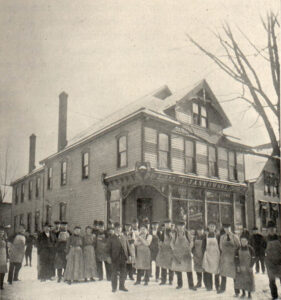
The University at Buffalo’s historical collection contains a photograph from the early 1900s of Joseph Jankowski’s Tobacco Store, home of the “Sobieski Cigar.” A crowd stands outside the shop in the Buffalo snow. The store appears to have been attached to someone’s house.
A cigar shop.
People gathered outside.
Buffalo winter.
More than a century ago.
Some things apparently don’t change very much.
Buffalo cigar culture isn’t new. Joseph Jankowski’s Tobacco Store, home of the Sobieski Cigar, in early 20th-century Buffalo. Courtesy University at Buffalo Libraries.
And the cigar culture hasn’t disappeared from Western New York. Buffalo Cigars operates multiple locations in the region, including a downtown shop on Main Street.
I went looking for Virgil’s while writing this article.
I couldn’t find it.
Maybe it closed. Maybe it changed names. Maybe I’m missing something.
If somebody from Buffalo remembers Virgil’s—or knows what became of it—I’d genuinely like to hear from you.
Because somebody there once fed a stranger from Rhode Island pizza and offered him venison.
I haven’t forgotten it.
The Cigar Lounge Is a Strange Little Democracy
Spend enough time in cigar lounges and you’ll notice something.
People talk to each other.
That sounds ridiculously simple until you consider how rarely it happens anymore.
We spend enormous amounts of time staring into phones, filtering ourselves into political camps, professional circles, age groups and economic tribes.
Then you walk into the right cigar lounge.
The guy in the chair beside you might be a surgeon.
Or a truck driver.
A barber.
A judge.
A mechanic.
A retired cop.
A teacher.
A guy between jobs who doesn’t particularly feel like explaining himself today.
Somebody asks:
“What are you smoking?”
And there it is.
Conversation.
Not always profound conversation.
Sometimes it’s sports.
Sometimes politics—which can be dangerous territory.
Sometimes food.
Cars.
Marriage.
Business.
Travel.
Kids.
Music.
Or why the cigar you’re smoking isn’t nearly as good as the guy sitting next to you insists his is.
There are egos in cigar lounges, of course.
We’re still human.
But at their best, these places temporarily flatten some of the divisions we carry around outside.
The cigar becomes common ground.
This Didn’t Start With the Modern Cigar Lounge
The social world around cigars is much older than leather chairs, flat-screen televisions and walk-in humidors.
Go back to late nineteenth- and early twentieth-century Ybor City in Tampa, and cigar culture wasn’t a hobby occupying one storefront.
It helped build a community.
Cuban and Spanish immigrants arrived to work in the cigar industry, followed by Italians, Eastern European Jews, Chinese immigrants and others. The National Park Service’s history of Ybor City describes an unusually diverse community in the American South, built around cigar manufacturing and the businesses, homes, clubs and institutions that grew alongside it.
At its height, thousands of people were connected to Tampa’s cigar industry. The Smithsonian’s history of Tampa’s cigar factories tells the story of an industry that once employed roughly 10,000 rollers working in about 200 factories.
But here’s the part I love.
They had readers.
Imagine Somebody Reading You a Novel While You Roll Cigars
They were called lectores.
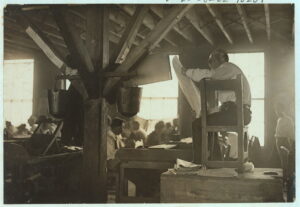
Cigar workers would hire someone to sit above the factory floor and read aloud while they worked.
Newspapers.
Political commentary.
Literature.
Novels.
Think about that.
Hands rolling tobacco.
Someone’s voice traveling across the factory floor.
Workers listening to stories and arguments and news from a world beyond the building.
The cigar factory wasn’t merely producing cigars.
Ideas were moving through the room too.
The lector tradition turned cigar factory floors into places where workers heard newspapers, politics, literature and novels while they worked.
That’s why the lector has always fascinated me. We’ve explored that history elsewhere on ThinkCigar because it represents something much bigger than an interesting cigar fact. Read our story of El Lector and the cigar factory reader.
It tells you that cigar culture has always involved conversation and story.
The cigar was being made while culture was happening around it.
Ritual Matters Too
Ask ten cigar enthusiasts about their ritual and you’ll probably get twelve answers.
Somebody has a favorite chair.
Somebody has a particular cutter.
Someone else has a lighter that apparently possesses supernatural properties and must never be touched by another human being.
There’s the selection.
The cut.
The light.
The first few minutes when everyone decides whether the cigar is going to behave itself.
But ritual isn’t necessarily about being precious or sophisticated.
It’s about intentionally setting aside some time.
That distinction matters.
There is a version of cigar culture that can become painfully concerned with proving who knows the most.
Wrapper.
Binder.
Filler.
Factory.
Vintage.
Country.
Limited release.
Tasting notes containing flavors I’m fairly certain no human being has ever actually eaten.
Hints of antique saddle leather with a whisper of Himalayan nutmeg.
Fine.
If that’s your thing, enjoy it.
But you don’t need a doctorate in tobacco to belong in the room.
Being a Cigar Enthusiast Isn’t a Competition
This may be one of the most important things we’ve learned building ThinkCigar.
You don’t have to know everything.
I certainly don’t.
That’s part of the reason ThinkCigar exists.
I’m still curious.
I still find things I didn’t know.
I still meet people who know more about some corner of this world than I ever will.
And I’d rather ask them a question than pretend otherwise.
A cigar enthusiast isn’t necessarily the person who can identify a wrapper leaf from across the room.
It might simply be the person who understands that there’s a story worth hearing.
Who grew the tobacco?
Who rolled it?
What country did it come from?
Why did cigar factories once employ people to read novels?
Why does one neighborhood in Tampa have a cigar history tied to immigration, labor, politics and Cuba?
Why did a bunch of strangers in Buffalo decide some guy waiting for a flight needed pizza?
Food, spirits and cigars have their own cultures, but when they meet, something else happens.
The point isn’t simply:
What bourbon goes with this cigar?
Sometimes the more interesting question is:
Where are we? Who made this? Who cooked that? Why do people here drink this? And who are we sharing it with?
That’s the difference between consumption and experience.
One fills an evening.
The other can become a memory.
Travel Changes the Cigar
I’ve become increasingly interested in what happens when you follow the cigar back toward the places and people behind it.
Nicaragua is a perfect example.
It’s easy to look at a cigar band and see a country of origin.
Nicaragua.
One word.
But start pulling on that thread and suddenly you’re dealing with revolution, dictatorship, Cuban exiles, Estelí, agriculture, American business, war and generations of people whose lives became intertwined with tobacco.
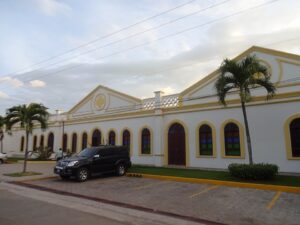
Inside a cigar factory in Estelí, Nicaragua—where tobacco, skilled hands and generations of history meet. Photo: Tisey / Wikimedia Commons, CC BY-SA 4.0.
And eventually other places where the cigar becomes an entrance into entirely different traditions surrounding hospitality, food, spirits, craftsmanship and place.
That’s the world I’m interested in exploring.
Not just:
What are you smoking?
But:
Where did it take you?
Sometimes the Cigar Isn’t the Experience
That afternoon in Buffalo taught me something I didn’t understand until much later.
I don’t remember what cigar I smoked at Virgil’s.
Seriously.
For a man who runs a cigar publication, that’s probably a terrible admission.
I remember the deer heads.
I remember the television room.
I remember the pizza.
I definitely remember being offered venison.
And I remember how people who had absolutely no reason to care whether I enjoyed my three hours in Buffalo made sure that I did.
The cigar?
Gone.
And maybe that’s the point.
Sometimes the cigar isn’t the experience.
It’s the thing that gets you through the door.
The World Behind the Cigar
That’s what we mean at ThinkCigar when we say cigar lifestyle.
It isn’t about convincing everyone to smoke cigars.
It isn’t about pretending every cigar is a luxury object.
And it isn’t about turning cigar knowledge into some private club where newcomers are afraid to ask questions.
It’s about recognizing that behind the cigar is a surprisingly large world.
Farmers.
Rollers.
Lectors.
Immigrants.
Factory owners.
Bartenders.
Chefs.
Lounge owners.
Travelers.
Old friends.
Complete strangers.
And occasionally a guy in Buffalo with extra venison.
The cigar may be what brings everyone into the room.
But the room—the conversation, the meal, the journey, the people and the memory—is what brings them back.
That’s cigar culture.
And that’s the world ThinkCigar exists to explore.
It’s a Lifestyle.
Continue Exploring the World Behind the Cigar
Explore more stories about the people, places, traditions and experiences surrounding cigars in the ThinkCigar Cigar Lifestyle hub.
Travel deeper into food, spirits, destinations and culture with Smoke, Sip & Savor.
Explore the extraordinary history of the people who once read newspapers and novels aloud over cigar factory floors in our story of El Lector.
And follow the cigar into revolution, dictatorship and exile in our exploration of Nicaragua’s cigar history.
ThinkCigar Media It’s a Lifestyle. The world behind the cigar.
How Cuban exiles, volcanic earth, political power, war and thousands of working hands turned Nicaragua into one of the world’s great cigar countries.
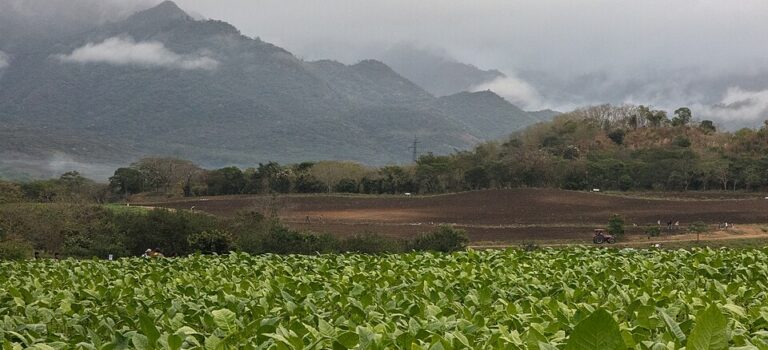
There is something almost romantic about a tobacco field in Nicaragua.
Under the Central American sun, rows of broad green leaves stretch toward mountains in the distance. Around Estelí, the earth beneath them is dark and mineral-rich. Travel north toward Condega and Jalapa and the landscape changes. Far to the south, tobacco is even cultivated on Ometepe, the extraordinary island dominated by two volcanoes rising from Lake Nicaragua.
It is easy to look at these places and tell a simple story.
Rich soil.
Perfect climate.
Exceptional tobacco.
Great cigars.
But Nicaragua’s cigar story has never been that simple.
Behind the cigars resting today in humidors around the world is a story of refugees and dictators, American presidents and revolutionaries, burned factories and economic survival.
There is money in the story.
There is political power.
There are even mistresses, brothels, guns and whiskey lurking around its edges.
And behind all of it are thousands of Nicaraguans whose hands turn tobacco leaves into one of their country’s most celebrated exports.
To understand the Nicaraguan cigar, you have to understand something about Nicaragua.
And that story begins, strangely enough, in Cuba.
The Revolution That Planted a Seed
When Fidel Castro’s revolution transformed Cuba in 1959, it didn’t merely change a government.
It scattered generations of knowledge.
Cuban tobacco growers, blenders and cigar makers left the island and began looking throughout the Caribbean and Central America for something very particular: land capable of producing tobacco worthy of the traditions they had left behind.
Nicaragua caught their attention.
In the mid-1960s, Cuban tobacco men including Juan Francisco Bermejo began experimenting with Cuban seed in northern Nicaragua. Estelí and Condega proved particularly promising.
In 1968, Bermejo and fellow Cuban Simón Camacho founded the Nicaragua Cigar Company in Estelí.
The cigar eventually became known as Joya de Nicaragua — “Jewel of Nicaragua.”
It was Nicaragua’s first major internationally marketed cigar brand.
Joya de Nicaragua’s own history chronicles those beginnings and the extraordinary political upheaval the company would subsequently survive.
The Cuban Revolution had inadvertently helped create a competitor.
And the land was ready.
What the Volcanoes Left Behind
Cigar people use the French wine term terroir frequently, sometimes a little too romantically.
In Nicaragua, however, geography genuinely matters.
Estelí lies in Nicaragua’s northern highlands. Its brown-to-black soils developed partly from volcanic rock and contain substantial mineral content. Tobacco grown there has become particularly associated with strength and spice.
Move north and the equation changes.
Condega’s elevation, soils and climate produce tobacco with different characteristics.
Farther toward the Honduran border lies the Jalapa Valley, prized particularly for beautiful wrapper leaf and tobacco often described as sweeter and more aromatic than the heavier leaf associated with Estelí.
Then there is Ometepe.
Sitting in Lake Nicaragua beneath the volcanoes Concepción and Maderas, the island produces tobacco in an environment unlike the northern growing regions.
Four names — Estelí, Condega, Jalapa and Ometepe — can therefore appear on a cigar blender’s map almost like vineyards on a winemaker’s.
But exceptional soil alone doesn’t create an industry.
For that, Nicaragua needed politics.
And Nicaragua had plenty.
A Dictator Discovers His Country’s Cigar
This is where the story begins to sound like something written for a movie.
Except much of it happened.
Anastasio Somoza Debayle ruled Nicaragua as part of a family dynasty that had dominated the country for decades.
The Somozas controlled far more than politics. Anastasio Somoza controlled the military and accumulated extensive economic interests. U.S. historical records describe a Nicaragua in which political authority, the National Guard and economic power had become deeply intertwined.
Then the dictator discovered something interesting about the little cigar factory in Estelí.
And sitting in the White House was a box bearing the bands of the Nicaragua Cigar Company.
The precise details of stories like this inevitably become polished after being retold for half a century, but the essential development is well documented: Joya de Nicaragua had become remarkably successful in the United States and was associated with the Nixon White House.
Somoza noticed.
He already had tobacco interests of his own.
Now he wanted the cigar factory.
Joya de Nicaragua’s historical account says founder Juan Francisco Bermejo sold part of the Nicaragua Cigar Company to Somoza under political pressure.
Either way, Nicaragua’s first internationally successful cigar company had attracted the attention of the country’s most powerful man.
A cigar born partly from refugees fleeing one revolution had now become entangled with a dictatorship headed toward another.
Cigars, Power and the Nightlife of a Dictatorship
The world surrounding the Somoza regime was considerably less genteel than the image of a cigar being selected at the White House.
Historical scholarship describes a political system in which Nicaragua’s National Guard and local political operators participated in an underground economy that included gambling, illegal alcohol and prostitution.
Bars and brothels could become part of networks of patronage and political loyalty.
Historian Robert J. Sierakowski explores this darker social and political landscape in Sandinistas: A Moral History, published by the University of Notre Dame Press.
This wasn’t organized crime in the Hollywood sense, and it would be irresponsible to pretend that Nicaragua’s cigar industry itself was a criminal enterprise.
But the cigar business was operating inside a political system in which the boundaries separating government, private wealth, vice and personal power could become remarkably blurry.
And Somoza himself supplied plenty of intrigue.
Although married to Hope Portocarrero, Somoza maintained a well-known relationship with Dinorah Sampson.
The relationship was public enough to appear in American diplomatic correspondence.
The cable explicitly refers to Sampson as Somoza’s mistress.
It is a small detail in the history of a dictatorship.
But it reveals something about the Nicaragua in which the cigar industry was coming of age.
This wasn’t simply a story about farmers discovering good soil.
It was a world of powerful families, political patronage, wealth, nightlife, revolutionary movements and increasingly violent opposition.
Somewhere inside that world, workers in Estelí continued rolling cigars.
Then the Country Exploded
By the late 1970s, Nicaragua was approaching breaking point.
Opposition to Somoza had grown across social classes. The assassination of prominent newspaper publisher Pedro Joaquín Chamorro in January 1978 became a catalyst for mass demonstrations and escalating conflict.
The Sandinista National Liberation Front intensified its campaign.
Joya de Nicaragua’s factory was attacked and burned during the uprising.
Then came one of the strangest episodes in cigar history.
According to Joya de Nicaragua’s historical account, aircraft loyal to Somoza bombed the factory because they believed Sandinistas were using it as a base.
Think about the irony.
The dictator who had maneuvered his way into the cigar company because he recognized its prestige was now fighting so desperately to retain power that forces loyal to him attacked the same factory.
Joya wasn’t alone.
José Orlando Padrón, another Cuban exile building a cigar business in Nicaragua, watched his Estelí factory and warehouse burn during the revolutionary turmoil.
Bullet holes would remain visible on Padrón’s factory years later.
The revolution that had driven cigar makers out of Cuba had followed them to Nicaragua.
July 1979
Somoza fled Nicaragua on July 17, 1979.
Two days later, Sandinista forces entered Managua.
More than four decades of Somoza family domination were over.
For Nicaragua’s cigar makers, however, the uncertainty wasn’t.
The new government nationalized businesses, including the Nicaragua Cigar Company.
Yet one of the most revealing chapters of this story isn’t about presidents or revolutionaries.
It’s about workers.
The Joya factory was rebuilt.
Production resumed.
At Padrón, the relationship between the factory and its workforce became even more significant.
During one government shutdown, workers reportedly marched through Estelí demanding that the Padrón factory be allowed to reopen.
José Padrón argued to Sandinista authorities that the company wasn’t simply his business.
It provided jobs Estelí needed.
The argument apparently mattered. Authorities eventually allowed operations to continue and, according to Padrón’s account, at one point reconsidered plans to conscript some factory workers into military service.
The Padrón family’s account of those years provides an extraordinary glimpse of what happens when a luxury business suddenly becomes entangled with revolution, employment and survival.
The cigar had become something more important than luxury.
For families in Estelí, it was a paycheck.
Another War, Another Embargo
Peace did not follow the revolution.
The Sandinista government soon faced the U.S.-backed Contra insurgency, and Nicaragua entered another violent chapter.
Then the American market effectively disappeared.
In 1985, President Ronald Reagan imposed a comprehensive trade embargo on Nicaragua, cutting Nicaraguan products off from the U.S. market.
For an industry producing premium cigars primarily for export, the consequences were severe.
Joya de Nicaragua describes cigars piling up while wages became increasingly difficult to sustain.
Padrón shifted cigar production to Honduras.
Again, Nicaragua’s cigar industry appeared capable of disappearing.
Again, it didn’t.
Following the 1990 election and political transition, the United States lifted the embargo.
Factories returned.
Investment followed.
Then came another cigar boom.
Estelí Becomes Cigar Country
Drive into modern Estelí and tobacco isn’t hidden somewhere beyond the city.
It is part of the city’s identity.
Fields surround the region.
Factories employ thousands.
Wooden cigar boxes have to be manufactured. Packaging has to be printed. Tobacco has to be planted, picked, transported, sorted, fermented and aged.
Restaurants feed workers and visitors.
Hotels receive cigar tourists.
Drivers transport buyers and industry executives.
Tour operators take visitors into fields and factories.
The cigar creates an ecosystem.
And Nicaragua eventually accomplished something that would have seemed improbable when those first Cuban seeds were planted.
It overtook the Dominican Republic as the largest source of premium handmade cigars entering the United States.
According to Cigar Association of America figures reported by Cigar Aficionado, Nicaragua shipped approximately 258.4 million premium cigars to the United States in 2025 — roughly 60 percent of U.S. premium cigar imports.
The refugee industry had become the market leader.
But numbers like 258 million can hide something.
Every handmade cigar still passes through human hands.
The Hands Behind the Cigar
Watch an experienced cigar roller work and the movement can appear effortless.
It isn’t.
Premium cigar manufacturing remains extraordinarily dependent upon skilled manual labor.
Leaves are inspected and sorted.
Filler tobacco is selected.
The bunch is formed.
Binder is applied.
Wrapper — sometimes the most visually perfect and expensive leaf on the cigar — is carefully stretched and rolled around the bunch.
The cap is cut and applied.
Then come inspection, color sorting, banding, boxing and packaging.
Many of those hands belong to women.
Research conducted in Nicaragua has repeatedly described tobacco manufacturing as one of Estelí’s important sources of employment and an economic engine supporting jobs beyond the factory itself.
Researchers at Nicaragua’s Universidad Nacional Autónoma de Nicaragua (UNAN) have also studied the socioeconomic circumstances and occupational conditions of tobacco workers in Estelí. The university’s digital research repository provides an interesting counterpoint to the industry’s marketing material because it allows the experiences of workers and researchers inside Nicaragua to enter the story.
That matters.
Factory work can provide regular wages in a country where economic opportunities are limited.
But employment is not the same thing as prosperity.
What Does the Worker Get?
This may be the most uncomfortable question in the story.
A premium Nicaraguan cigar sold in the United States can cost $10, $15, $20 or considerably more.
The person who helped make it obviously doesn’t receive anything close to that.
That doesn’t automatically mean exploitation.
Retail pricing includes tobacco cultivation, years of inventory carrying costs, manufacturing, packaging, transportation, taxes, distribution, retail margins and considerable business risk.
But the contrast deserves examination.
Research available through UNAN’s academic repository has examined occupational health, workplace conditions and socioeconomic issues involving Nicaragua’s tobacco workforce.
Some studies of Estelí cigar factories have identified concerns involving employee motivation, working conditions, training, compensation and workplace safety.
Those findings shouldn’t be used to condemn an entire industry based upon individual factories or studies conducted at particular moments.
But neither should they disappear beneath romantic photographs of tobacco fields.
Both realities can exist simultaneously.
The cigar industry can provide desperately important employment.
And some of those jobs can still be difficult, inadequately compensated or physically demanding.
That’s the contradiction worth understanding.
When an Entire City Depends on a Luxury
There is another side to becoming cigar country.
Dependency.
Tobacco has become one of Estelí’s dominant economic engines.
That means a boom in premium cigars can ripple through the city.
It also means a downturn can do the same.
When factories cut production, the consequences aren’t confined to cigar-company balance sheets.
Workers lose hours.
Families lose income.
Businesses serving those workers feel it.
The same cigar that represents leisure to someone sitting in a lounge in Atlanta may represent rent, groceries and school expenses to a household in Estelí.
Perhaps that is the most important connection between the cigar smoker and Nicaragua.
They participate in the same economy while experiencing it from opposite ends.
And Yet, There Is Pride
None of this means we should view Nicaragua’s cigar workers merely as victims of an international luxury industry.
That would be another kind of stereotype.
Cigar making is skilled work.
Generations of knowledge have developed in Nicaragua since those Cuban tobacco pioneers arrived.
Nicaraguan growers understand their fields.
Sorters learn tobacco by sight and touch.
Rollers develop remarkable dexterity and consistency.
Blenders understand how tobacco from Estelí behaves differently from tobacco grown in Jalapa, Condega or Ometepe.
There is craftsmanship here.
And increasingly there is national identity.
The cigar is no longer simply something Cuban immigrants taught Nicaragua to manufacture.
More than half a century later, it belongs to Nicaragua.
The World Behind the Cigar
So perhaps the next time you light a Nicaraguan cigar, take another look at the band.
Not because the band tells you everything.
Because it tells you almost nothing.
It doesn’t show you the volcanic soil.
It doesn’t show you the Cuban exiles searching for somewhere to begin again.
It doesn’t show you Anastasio Somoza discovering Nicaraguan cigars in the White House and deciding he wanted a piece of the business.
It doesn’t show you the dictatorship’s strange intersection of politics, money, nightlife and vice.
It doesn’t show you the revolutionaries.
Or the burned factories.
Or the bullet holes.
It doesn’t show you the workers who rebuilt.
It doesn’t show you the woman sorting wrapper leaf or the roller whose hands will repeat the same practiced movement hundreds of times before going home.
It doesn’t show you Estelí.
But all of that is there.
Rolled inside.
And perhaps that’s why Nicaragua is worth understanding not simply as one of the world’s great cigar producers, but as a destination.
Go for the tobacco fields.
Walk through a factory.
Talk to the people making the cigars.
Eat what they eat.
Drink what they drink.
Walk the streets beyond the factory gates.
Ask what changed when tobacco money arrived.
Ask who prospered.
Ask who didn’t.
Because sometimes the most interesting thing about a cigar has nothing to do with how it tastes.
It is the world that put it in your hand.
Continue Exploring the Cigar Lifestyle
Nicaragua is only one part of a much larger story. Explore the ThinkCigar Cigar Lifestyle Hub for more stories about the people, places, traditions, travel, rituals and experiences that make the cigar about far more than what we smoke.
The Original Podcast: How El Lector Shaped Cigar Culture
Long before podcasts, audiobooks, and streaming, cigar factories echoed with the voices of professional readers who educated, entertained, and inspired generations of workers.
🎥 Watch the ThinkCigar Short
Before continuing, experience the remarkable story of El Lector in this short cinematic feature from ThinkCigar.
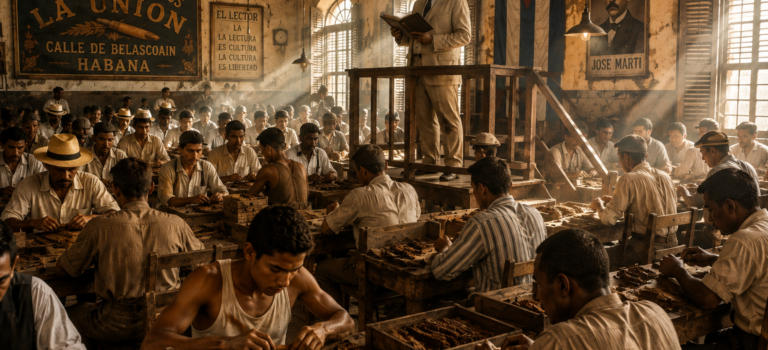
Imagine stepping inside a cigar factory in Havana more than a century ago.
Hundreds of skilled hands move rhythmically, transforming tobacco leaves into handcrafted cigars. The room is surprisingly quiet—not because there is nothing to say, but because everyone is listening.
High above the factory floor stands a single man holding a well-worn book.
He clears his throat.
The room falls silent.
Then he begins to read.
Long before podcasts, audiobooks, radio, or streaming media, cigar factories throughout Cuba, Spain, Key West, and Tampa embraced a remarkable tradition known simply as El Lector—The Reader.
His voice informed, entertained, educated, and inspired generations of cigar workers, leaving a legacy that still echoes through cigar culture today.
📚 More Than Entertainment
Most cigar enthusiasts know about premium tobacco, humidors, and aging rooms.
Far fewer know about the remarkable individuals whose voices filled cigar factories every working day.
El Lector wasn’t simply reading books.
He represented something much larger.
✨ A shared belief that knowledge belonged to everyone.
💰 The People’s Teacher
One of the most fascinating aspects of El Lector wasn’t what he read.
It was who paid him.
Unlike factory supervisors or managers, El Lector generally wasn’t on the factory payroll.
Instead, the cigar rollers themselves pooled small contributions from their modest wages to support the reader.
Think about that for a moment.
Workers who often struggled to provide for their own families still chose to invest in…
📖 Books
📰 Newspapers
🎭 Literature
🎙️ Ideas
That decision says as much about cigar culture as the cigars themselves.
Knowledge wasn’t considered a luxury.
It was considered essential.
“The cigar rollers didn’t simply invest in tobacco—they invested in knowledge.”
📖 What Did El Lector Read?
Every factory developed its own personality, but many lectores read:
📰 National and international newspapers
📚 Classic novels
🎭 Poetry
🧠 Philosophy
🇨🇺 José Martí
🇪🇸 Miguel de Cervantes
🇫🇷 Victor Hugo
🇫🇷 Alexandre Dumas
Entire factories laughed together…
Debated together…
Sometimes argued passionately about what should be read next.
The factory became much more than a workplace.
It became…
🎓 A classroom.
🎭 A theater.
❤️ A community.
🎤 A Voice Worth Listening To
The role demanded much more than a pleasant speaking voice.
Many lectores were former teachers, journalists, professors, writers, or gifted public speakers.
They possessed the rare ability to bring characters to life while also helping workers understand current events, literature, and politics.
Their voices became some of the most respected voices inside the factory walls.
🌎 The Tradition Lives On
Technology has changed.
Human nature hasn’t.
Today’s rituals may look different, but they serve a remarkably similar purpose.
☕ Listening to an audiobook with your morning coffee.
🎧 Enjoying a favorite podcast during a quiet evening.
✈️ Discovering new cultures while traveling.
🥃 Sharing meaningful conversations over a fine bourbon.
🚬 Reflecting quietly during life’s slower moments.
The format has evolved.
The experience remains timeless.
🎥 Watch El Lector Featured on Fox News
Want to explore the story even further?
This Fox News feature highlights the remarkable tradition of El Lector and why it remains one of the most fascinating chapters in cigar history.
At ThinkCigar, we’ve always believed cigars represent something much larger than tobacco.
They represent…
🤝 Conversation
🌎 Culture
📖 Storytelling
🧭 Discovery
🕰️ Slowing down in a world that rarely does.
El Lector reminds us that some of the richest traditions aren’t built only around craftsmanship…
They’re built around people.
✨ Final Thoughts
Perhaps El Lector never truly disappeared.
Maybe we’ve simply changed where we listen.
Whether it’s an audiobook during an evening on the patio…
A podcast while traveling…
A meaningful conversation shared over coffee…
Or a story passed from one generation to the next…
Great stories still have the power to bring people together.
More than a century later, the voice of El Lector reminds us that the finest traditions are often built not only around craftsmanship…
…but around curiosity, learning, and the timeless human desire to share a story.
🌎 Continue the Journey
If you enjoyed the story of El Lector, explore more cinematic stories from ThinkCigar celebrating travel, culture, craftsmanship, and the premium cigar lifestyle.
For a deeper look at the history behind this remarkable tradition, revisit our original ThinkCigar feature, El Lector — Cigar Factory Reader, exploring the readers who brought literature, news, and ideas into the cigar factories.
☕ Every Great Cup Has a Story
Coffee begins long before the first sip.
Discover the remarkable journey from coffee cherry to your morning cup.
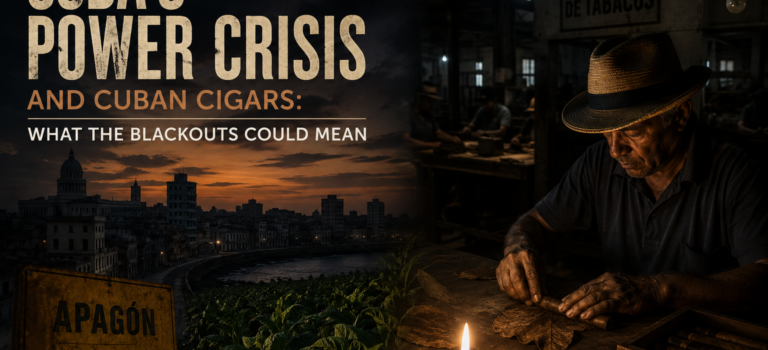
Cuba’s worsening energy crisis is affecting nearly every part of daily life on the island.
In July 2026, Cuba experienced repeated failures of its national electrical grid, leaving millions of people without power. Residents have dealt with prolonged blackouts, water shortages, limited transportation, food spoilage, and interruptions to basic services.
For cigar enthusiasts, this raises an understandable question:
What could Cuba’s power crisis mean for Cuban tobacco and the future availability of Cuban cigars?
There is no simple answer. Cuban cigars are agricultural products made through a combination of natural processes, skilled handwork, careful aging, transportation, storage, and international distribution.
A blackout does not instantly stop every cigar from being rolled.
But when electricity and fuel remain unreliable for weeks or months, pressure can build throughout the entire system.
Cuba’s Energy Crisis Is No Longer a Temporary Problem
Cuba has experienced repeated nationwide blackouts since 2024, but the situation intensified considerably during 2026.
A nationwide grid collapse in early July was followed by another islandwide blackout only days later. Fuel shortages and failures within Cuba’s aging electrical infrastructure have made sustained recovery increasingly difficult.
The human consequences are much more serious than any concern about cigars. Families are struggling to refrigerate food, pump water, use medical equipment, travel to work, and escape extreme heat.
That context matters.
Premium cigars may be one of Cuba’s most recognized exports, but the people who plant, harvest, process, roll, package, transport, and sell those cigars are living through the same crisis.
Cuban Cigar Production Does Not Begin in a Factory
When people picture cigar production, they often imagine a roller seated at a wooden table inside a Havana factory.
That is only one stage of a much longer journey.
Premium tobacco begins in the fields, where the plants require:
Prepared soil
Reliable irrigation
Continuous attention
Careful harvesting
Controlled curing
Fermentation
Sorting
Aging
Transportation
Skilled rolling
Packaging and storage
A Habano can take years to reach the market. According to Habanos S.A., certain tobacco leaves require additional fermentation and extended aging before they are ready to become part of a finished cigar.
That long process gives the industry some protection from a short outage because tobacco and finished cigars already exist in various stages of aging and storage.
The larger risk comes when electrical and fuel shortages persist long enough to interrupt several links in the chain at once.
Where Electricity and Fuel Matter Most
The act of rolling a premium Cuban cigar remains largely manual.
That does not mean the surrounding industry can operate indefinitely without reliable power.
Irrigation and agricultural support
Tobacco plants require careful watering and field management. Electrical interruptions can affect pumps, wells, equipment, and the ability to deliver water where it is needed.
The most important Cuban tobacco regions are agricultural communities, and prolonged rural outages may last longer than those in high-profile parts of Havana.
Curing and processing
Traditional tobacco curing relies heavily on air, time, ventilation, and the experience of farmers rather than industrial machinery alone.
However, modern facilities may still depend on electrical equipment for ventilation, monitoring, lighting, handling, climate control, and other supporting operations.
Fermentation and aging cannot simply be rushed to compensate for lost time. The leaves must progress naturally and be monitored carefully.
Cigar factories
The cigar itself may be rolled by hand, but factories still need lighting, ventilation, communications, sanitation, inventory systems, and dependable working conditions.
Extended outages can shorten workdays, interrupt production schedules, make buildings uncomfortably hot, and reduce the number of people able to travel to work.
Storage
Finished cigars require stable conditions.
Temperature and humidity must be managed carefully so cigars do not dry out, absorb excessive moisture, develop mold, or lose the characteristics created through years of cultivation and aging.
Some storage facilities may have generators or alternative systems. Others may be more vulnerable to extended fuel and electricity shortages.
Transportation and distribution
Fuel may be an even greater problem than electricity.
Tobacco must move from farms to processing facilities. Workers must reach factories. Finished cigars must travel to warehouses, ports, airports, and international distributors.
Even when cigars are ready, unreliable transportation can delay their journey to retailers around the world.
The Habanos Festival Was Already Affected
The energy crisis has moved beyond speculation.
Earlier in 2026, Habanos S.A. postponed its internationally recognized cigar festival as fuel shortages and power disruptions worsened across the country.
The annual event attracts international retailers, collectors, distributors, journalists, and cigar enthusiasts. Its postponement showed that Cuba’s energy and transportation problems had become serious enough to disrupt one of the industry’s most important global gatherings.
Postponing a festival is not the same as stopping cigar production. However, it is a visible sign of how deeply the crisis is affecting tourism, transportation, hospitality, and the cigar economy surrounding the product.
Could Cuban Cigars Become Harder to Find?
Possibly—but the effect may not appear immediately.
Cigars currently available in stores may have been harvested, fermented, aged, rolled, packaged, and exported long before the latest grid collapse.
That creates a delay between problems inside Cuba and what consumers eventually see at retail.
The impact will probably not be equal across every brand and market.
Larger distributors and high-priority export destinations may receive inventory before smaller retailers. Premium or limited releases may also be handled differently from regular production.
It is too early to say exactly how much current blackouts will affect future cigar supply. Any confident claim that a specific brand is about to disappear would be speculation.
Will Prices Rise?
They could, but shortages are only one influence on Cuban cigar pricing.
Prices can also be affected by:
International demand
Currency conditions
Shipping and insurance costs
Distributor policies
Taxes and import duties
Luxury-market positioning
Scarcity created by collectors and resellers
If production and transportation decline while global demand remains strong, retailers may receive fewer cigars. Scarcity often places upward pressure on prices, particularly for prestigious marcas and difficult-to-find vitolas.
That does not mean every Cuban cigar will suddenly become unaffordable. It means enthusiasts should expect availability to remain uneven and pricing to vary substantially by country and retailer.
Should Cigar Enthusiasts Start Buying Everything They Can Find?
I would not recommend panic buying.
Fear-driven purchasing can produce inflated prices, encourage questionable sellers, and increase the risk of counterfeit cigars.
A better approach is to:
Buy from established, authorized, or highly trusted retailers
Avoid deals that appear too good to be true
Inspect storage conditions before purchasing
Keep personal cigars properly humidified
Explore quality cigars from other producing countries
Appreciate what you already own rather than treating every cigar as an investment
Cuba has a unique place in cigar history, but the premium cigar world also includes exceptional tobacco and craftsmanship from Nicaragua, the Dominican Republic, Honduras, Mexico, and other regions.
This Is Also a Story About the People Behind the Cigar
It is easy to discuss Cuban cigars as luxury objects.
The energy crisis reminds us that each cigar begins with people.
Farmers tend the soil and tobacco plants. Workers sort and ferment the leaves. Torcedores and torcedoras transform those leaves into finished cigars. Others inspect, band, box, store, transport, and distribute them.
They are not protected from blackouts simply because the product they help create is sold internationally.
That human connection is one reason ThinkCigar focuses less on assigning scores and more on the culture, traditions, people, and experiences surrounding the cigar.
A premium cigar represents far more than the hour or two during which it is enjoyed.
The ThinkCigar Perspective
Cuba’s power crisis will not erase its cigar tradition overnight.
The country has endured hurricanes, economic upheaval, shortages, political conflict, and decades of changing relationships with international markets. Cuban tobacco culture has survived because of the knowledge passed between generations and the extraordinary value placed on its craftsmanship.
But tradition alone cannot operate irrigation pumps, move workers, preserve storage environments, or transport finished cigars.
If Cuba’s electricity and fuel problems continue, the cigar industry will face the same pressures affecting every other part of the island’s economy.
For enthusiasts, the responsible response is not panic.
It is awareness.
Understand the work behind the cigar. Buy carefully. Store what you own properly. Remain open to premium cigars from across the world. Most importantly, remember that the people behind the product are experiencing consequences far more serious than an empty space on a retailer’s shelf.
That awareness is part of appreciating the larger cigar lifestyle: the history, craftsmanship, places, rituals, and people that give meaning to the leaf.
Make Your Next Cigar More Memorable
The uncertainty surrounding production is another reminder not to save every meaningful cigar for a “perfect” occasion that may never arrive.
Create the occasion.
Choose the right setting. Pour something you enjoy. Invite someone whose company matters—or take an hour of peaceful time for yourself.
Our complimentary ThinkCigar Weekend Ritual Guide offers ideas for creating more memorable cigar experiences through atmosphere, pairings, reflection, and tradition.
One of the things I enjoy most about writing ThinkCigar is the conversations that happen after an article is published.
Recently, I asked a simple question on Reddit:
“What makes your cigar ritual special?”
I expected to hear about favorite cigars, bourbon pairings, or humidors.
Instead, I received something much more meaningful.
The responses reminded me that the cigar itself is often just the beginning. What people truly remember are the traditions, the places, the people, and the quiet moments that surround it.
Having lived in Rhode Island before moving to Metro Atlanta nearly ten years ago, I’ve enjoyed cigars in many different settings—from New England evenings with friends to discovering Atlanta’s outstanding lounges. No matter where I’ve been, one thing has remained true: the ritual often becomes more memorable than the cigar itself.
The Lounge Is About More Than Smoking
Several readers described the lounge as their favorite part of the hobby.
One gentleman shared that he enjoys choosing a new cigar, sitting with his wife, having a few drinks, and simply enjoying the atmosphere. Another mentioned that his local lounge organizes baseball outings where friends and new acquaintances gather over premium cigars.
These stories reminded me why I’ve always believed cigars are about community.
If you’re looking for great places to experience that community, you’ll enjoy my guide to Atlanta Cigar Lounges:
One reader described smoking on the back patio while throwing a ball for his rescue dog after his pregnant wife stopped joining him because of the smell. Another enjoys sitting quietly by himself after a long workday, appreciating the peace that comes with a cigar.
Their stories illustrate that rituals don’t have to be elaborate.
Sometimes they simply create space to slow down.
Every Ritual Is Different
Some responses made me smile.
One cigar smoker said he and a friend choose a movie every week, light a cigar, pour a drink, and enjoy the evening together.
Another explained that before he even lights his cigar, he refills bird feeders, prepares peanuts for blue jays and woodpeckers, and only then decides which whiskey to pour.
For him, the ritual begins long before the first draw.
Respecting the Craft
Perhaps the most thoughtful response came from a gentleman who quietly reflects on everyone who helped bring the cigar to his hands.
He thinks about the farmers, the rollers, the packers, the shippers, and their families before making the first cut.
It’s a beautiful reminder that every premium cigar represents countless hours of craftsmanship.
That idea aligns perfectly with why ThinkCigar focuses on lifestyle instead of ratings.
Great Pairings Make Great Memories
Several conversations naturally turned toward enjoying cigars with good bourbon, whiskey, cocktails, or simply great company.
If you’re interested in creating memorable pairings, take a look at:
Reading through these conversations confirmed something I’ve believed since starting ThinkCigar.
The cigar is important.
But the stories created around it are what people remember years later.
The quiet porch.
The baseball game.
The lounge.
The spouse who joins you.
The dog waiting by the back door.
The movie night.
The traditions.
Those moments become the real cigar lifestyle.
Join the ThinkCigar Community
If these stories resonated with you, I’d love to invite you to become part of the ThinkCigar community.
Download the complimentary ThinkCigar Weekend Ritual Guide and receive one thoughtful email each month exploring cigar culture, traditions, destinations, pairings, and memorable experiences.
A special Thank You to the Reddit (r/cigar) Community
This article wouldn’t have been possible without the thoughtful responses from members of the Reddit cigar community. Thank you for sharing your rituals, traditions, and stories. They reminded me that the cigar itself is only part of the experience—the people and the moments surrounding it are what make this lifestyle so memorable.
👉 Join ThinkCigar and Get the Free Weekend Ritual Guide
The cigar lifestyle is about far more than cigars.
At its best, it is a collection of rituals—moments intentionally set aside to slow down, connect with others, celebrate milestones, and appreciate the experiences that make life meaningful.
If you’re new to the concept, explore our Cigar Lifestyle Hub (https://thinkcigar.com/cigar-lifestyle/) to discover how culture, traditions, travel, hospitality, and pairings come together to create a richer cigar experience.
Whether you’re a seasoned enthusiast or just beginning your journey, these weekend rituals can help transform an ordinary weekend into something memorable.
1. Start the Morning Slowly
Before the demands of the day begin, take a few moments to enjoy a cup of coffee, a quiet setting, and a favorite cigar.
The goal isn’t speed—it’s presence.
The most meaningful rituals often begin with slowing down enough to appreciate the moment.
2. Create a Signature Pairing Ritual
Pairing a cigar with bourbon, rum, coffee, or another favorite beverage turns an ordinary smoke into an experience.
Experiment with different combinations and discover what works best for your palate. If you’re looking for inspiration, explore our Ultimate Bourbon & Cigar Pairing Guide for the Lifestyle Smoker:
The cigar lifestyle is deeply connected to culture and tradition.
7. Take a Destination Smoke
Whether it’s a rooftop overlooking the city, a beach at sunset, a mountain retreat, or a favorite patio, a special location can transform an ordinary cigar into a lasting memory.
Many of the most memorable experiences happen when cigars are combined with travel, food, and local culture.
The cigar lifestyle has long been associated with celebration.
Promotions, anniversaries, achievements, and personal victories all deserve recognition.
Marking important moments with a special cigar creates memories that last long after the smoke has faded.
9. Disconnect to Reconnect
Put away the phone.
Turn off notifications.
Use your cigar time to reflect, recharge, and reconnect with yourself and the people around you.
In today’s fast-paced world, intentional disconnection has become one of the most valuable rituals of all.
10. End the Weekend with Reflection
Before the new week begins, take a few moments to consider what made the weekend meaningful.
The best rituals aren’t about routine—they’re about intention.
Many enthusiasts discover that their most memorable cigars aren’t necessarily the most expensive. They’re the cigars connected to meaningful experiences, conversations, traditions, and destinations.
The best cigar lifestyle experiences are often the simplest ones.
A meaningful ritual doesn’t require luxury—it requires intention.
Whether your ritual includes a favorite pairing, a visit to a local lounge, a destination smoke, or an evening shared with friends, the goal is the same: to create moments worth remembering.
Looking to create your own weekend ritual?
Download the complimentary ThinkCigar Weekend Ritual Guide and discover how culture, pairings, hospitality, traditions, and memorable experiences can help elevate your weekends:
Some feel polished and luxurious. Others feel historic, relaxed, energetic, artistic, or deeply rooted in tradition. But the strongest cigar destinations all seem to share one thing in common:
They create an atmosphere people want to return to.
Part of the appeal of cigar culture has always been tied to place. Certain cities naturally develop their own rhythm around lounges, hospitality, nightlife, bourbon, food, conversation, and the simple ritual of slowing down for a while.
In some cities, cigar lounges feel like quiet escapes hidden above busy streets.
In others, they become social gathering places where conversations move effortlessly between business, travel, sports, music, and life itself.
That is part of what makes cigar travel so interesting.
The experience is never only about the cigar.
It becomes connected to architecture, music, local culture, lighting, service, food, weather, and the personalities of the people inside the room.
Atlanta has its own energy — a growing mix of modern lounges, bourbon culture, rooftop experiences, and conversation-driven hospitality that continues to shape the city’s cigar scene in unique ways. Places like Highland Cigar Co. and The Cigar Bar have helped create an atmosphere where premium cigars feel naturally connected to nightlife, music, and social connection.
Louisville naturally blends cigar culture with bourbon heritage, creating an atmosphere where pairing experiences and slower evenings feel deeply connected to the identity of the city itself. Experiences surrounding brands like Rabbit Hole, Bardstown Bourbon Company, and the city’s expanding bourbon tourism scene continue shaping the relationship between cigars, hospitality, and premium lifestyle culture.
Tampa carries generations of cigar history through Ybor City, where the influence of old cigar factories and Cuban traditions still shape the atmosphere surrounding the leaf today. Walking through Ybor still feels connected to one of the most historically important cigar destinations in the United States.
Las Vegas approaches cigar culture through luxury, nightlife, and spectacle, offering lounges that feel immersive, cinematic, and built around the experience as much as the cigar itself. From rooftop cigar lounges to high-end resorts and whiskey bars, the city embraces cigar culture as part of a larger premium nightlife experience.
Nashville brings together music, whiskey, conversation, and Southern hospitality in a way that gives the cigar lifestyle a more relaxed and personal rhythm. The city’s growing bourbon scene and intimate lounge culture continue attracting people who appreciate atmosphere as much as the cigars themselves.
Miami blends international influence, late-night energy, luxury hospitality, and deep Latin cigar traditions into a cigar culture that feels vibrant, social, and unmistakably alive. The city’s connection to Cuban heritage and premium nightlife gives Miami one of the most recognizable cigar atmospheres anywhere in the country.
No two cigar cities feel exactly the same.
And maybe that is part of what keeps the lifestyle interesting.
The best cigar destinations are not always the loudest or most famous.
Sometimes they are simply the places where the atmosphere feels authentic enough that people naturally slow down, stay longer than planned, and leave already thinking about returning.
That is usually a sign that the city — and the culture surrounding it — got something right.
Explore more cigar lifestyle culture, lounges, pairings, and travel experiences at: https://thinkcigar.com
There are cigars people remember because of flavor.
Then there are cigars people remember because of the moment around them.
The second kind tends to last longer.
Spend enough time around cigar culture and you start to notice something interesting: most people don’t talk about cigars the way reviews do. They rarely lead with strength, wrapper origin, or tasting notes. Instead, they talk about where they were, who they were with, and what kind of day it had been before they lit up.
The cigar becomes tied to the memory.
A quiet morning before the world wakes up. A long overdue conversation with an old friend. A late evening on a back porch after a difficult week. A fishing trip. A rooftop lounge. A celebration. A goodbye.
The best cigars usually come with a story because the cigar itself often becomes part of a larger experience.
That may be one reason cigar culture feels different from so many other hobbies. Cigars naturally slow things down. They create space for conversation, reflection, and presence in a world that increasingly rewards speed and distraction.
For some people, cigars are deeply social. They enjoy the atmosphere of a lounge, the rhythm of conversation, and the way a good cigar can stretch an evening longer than expected.
What’s interesting is that neither approach is more “correct.” In many cases, the same person values both depending on the season of life, the environment, or simply the mood of the day.
That flexibility may be part of why cigar culture remains so personal.
A great cigar can elevate celebration, but it can also bring comfort to solitude. Sometimes the cigar is the centerpiece of the experience. Other times it quietly fades into the background while the moment itself becomes unforgettable.
Years later, most people won’t remember every cigar they smoked.
But they often remember:
the conversation
the setting
the music
the weather
the person sitting across from them
And somewhere inside that memory, the cigar remains attached to the story.
That deeper connection to atmosphere, ritual, and experience continues to shape the editorial direction of ThinkCigar’s broader 👉 https://thinkcigar.com/cigar-lifestyle/
coverage.
That may be the real reason certain cigars stay with us long after the smoke disappears.