
Ybor city arch thinkcigar

The Birth of a Cigar Nation

News flash…it’s not Cuba !


We smoke, we buy sell and trade our favorite sticks, we’re in love with everything cigar (at least I am), and here in the US, always chasing the “White Wale”, El Capitan…the Cuban cigar.  The romantic thoughts and images, friends and family members bringing a few back from their cruises and trips abroad; chests puffed-up and poked-out as they present them to you, the holy grail of cigars, spoils of their great crusade.

cuban cigars thinkcigar

The history of our infatuation with these rolled delights is rooted much closer to our American soil than one might think…most know very well of the pre-embargo availability of Cuban cigars; but how many of us are truly aware that the cigar capitol of the world is (or was) in the United States of America.  Confused ?  I bet you are, you see boys and girls from Key West, to Tampa FL by way of Cuba is how this thing unfolds.  In the 1830s, commercial cigar rolling began in Florida, by Cuban immigrants.

New York cigar manufacturer Samuel Seidenberg (a German immigrant himself), established the first “clear Cuban” cigar factory in Key West in 1867.  Using Cuban laborers to roll Cuban tobacco Mr. Seidenberg, pioneered the idea of making authentic Cuban cigars in America, while avoiding the high tariff levied against products from Havana, as well as the trade restrictions imposed by Spain.

There was a strong natural connection between cigar workers in Key West and Havana, and by the early 1890s, 50,000-100,000 people traveled back and forth annually.
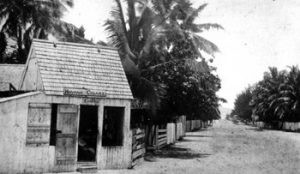
Havana cigar shop Key West (Havana cigar shop Key West FL, )


Cuban cigar makers create a new Florida city


Vicente Martinez Ybor, one of the most significant figures in the history of cigar making in Florida, established a cigar factory in Key West in 1869. Ybor had run a very successful cigar manufacturing business in Cuba, but he fled the country after colonial authorities discovered his connections with revolutionaries.

In 1885, he moved his cigar making operation from Key West to Tampa. Steamships could bring tobacco leaves from Cuba for the cigar factories, and Henry Plant’s new railroad connected the small town of Tampa to the rest of the country. The area around the cigar factories grew and became known as Ybor City.

Immigrants came not just from Cuba, but from Italy, Spain, and throughout Eastern Europe and Latin America in search of work. At its height in the 1880s, there were more than 100 factories in Key West. By 1910, there were 150 factories in the Tampa area employing more than 10,000 workers. Of the 50,000 residents of Tampa, 14,000 were Cuban, 7,500 were Spanish, and 1,500 were Italian.  (informational facts from Florida Memory)

There is so much more rich and incredible history that belongs to this phenomena:

  • Mutual Aid Societies
  • Social Clubs
  • Paulina Pedroso
  • Jose Marti
  • The Spanish-American war and Cuban independence


The complete history is available for anyone so inclined to pursue, so I won’t try to capture it here in it’s entirety; but I gotta tell you, as a cigar guy I find this interesting as hell.  By 1900 Ybor city was considered the cigar capitol of the world…not Cuba, but a carved out spot in hot-ass Tampa Florida.  It was thriving.
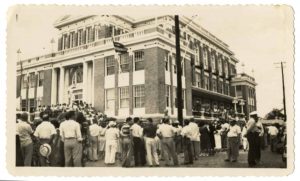
Cuban club thinkcigar

For more than 50 years Ybor city shined with approximately 150 cigar factories employing and supporting many workers and families, a small buzzing community built for and around the production of fine cigars had come together in a very meaningful way.  Our country had fallen in love with the craftsmanship of fine hand rolled cigars, an art form passed down through families…fathers to sons, mothers to daughters, enjoyed by many a cigar fan during that time.

Innovation !

We the people often times look to push through our accepted norms…this time in a way that would have an unforeseen affect on premium cigars.  In 1917, a cigar rolling machine was invented that could roll 4,000 sticks per day, and by 1928 more than 50 % of cigars were made by machines.  Ybor city began to slowly decline.
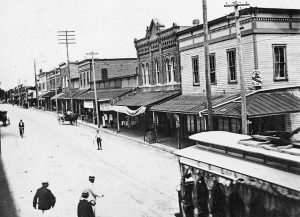
Ybor city thinkcigar

Our appetite for advanced machinery had placed it’s filthy hands around the neck of our home-grown Cuban cigar bonanza while we slept.  Mother F***er !  But some things refuse to die; while Ybor city, hasn’t reached it’s previously glory, it has surely refused to disappear.
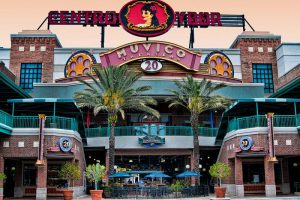
Ybor city thinkcigar

I have to say that upon learning the real history of the Cuban cigar connection to Ybor city, really fascinated me…but in all of my cigar conversations with friends and foe, I never hear of this rich history.  While I’m not of Cuban decent (I was born in Bradenton FL), I’m extremely proud of these facts that link the people, the struggle, the tobacco, the art and passion that made this all possible.

There are many other stories that I will write about in the future that were born in Ybor city; but for now I hope this has educated and entertained the reader.  Glad to spend this time you, it’s Friday and a good cigar awaits your arrival; don’t disappoint and enjoy your smoke.

ThinkCigar…It’s a lifestyle

 

cigar smoking and news


Historic Conestoga wagon associated with the origin of the cigar nickname stogie

What Is a Stogie? The History Behind the Cigar Nickname

Originally published April 19, 2019 · Updated September 2026

What is a stogie?

Today, stogie is an informal American word for a cigar. Historically, however, the word referred more specifically to a long, relatively inexpensive cigar—the kind associated with working men and, most famously, the drivers of Pennsylvania’s great Conestoga wagons.

Merriam-Webster defines stogie as both an inexpensive cigar and, more broadly, simply a cigar.

But that’s only the definition.

The story behind the word is much better.

Before There Were Stogies, There Were Conestoga Wagons

Historic Conestoga wagon associated with the origin of the cigar nickname stogie
A historic Conestoga wagon, 1862. Photo: Ware Bros. Co. / Library of Congress. Public domain.

Long before somebody casually said, “Let’s go smoke a stogie,” Conestoga wagons were moving freight across early America.

These weren’t the little covered wagons Hollywood taught generations of Americans to associate with westward migration. Conestoga wagons were massive freight haulers developed in Pennsylvania and built to carry heavy loads over difficult roads.

The Smithsonian’s National Museum of American History describes the Conestoga wagoner as a tough and colorful figure who spent weeks on the road hauling freight between American towns and cities.

And those wagoners had a habit.

They smoked cigars.

Specifically, the Smithsonian describes them smoking long, thin cigars nicknamed “stogies.”

That’s where cigar history and American road history collide.

Why Were Cigars Called Stogies?

The accepted etymology connects stogie to Conestoga, the Pennsylvania place name that also became associated with the famous wagon.

The Online Etymology Dictionary traces stogie/stogy as a cigar term to the 19th century and connects the name with the inexpensive cigars associated with Conestoga wagon drivers.

Even the shoes are part of the story.

Merriam-Webster still lists another meaning of stogie: a stout, coarse shoe or brogan.

Think about that for a moment.

A wagon.
A work shoe.
A cigar.

All connected to one Pennsylvania name.

The men hauling freight across rough American roads helped leave behind a word cigar smokers still use generations later.

Stogie or Stogy: Which Spelling Is Correct?

Both are correct.

Stogie is the spelling most cigar smokers will recognize today, while stogy survives as an accepted variant.

Merriam-Webster lists stogy as a variant of stogie.

So if you’ve wondered whether it’s stogie or stogy, neither one is a mistake.

But around a modern cigar lounge, stogie is the spelling you’re much more likely to see.

Is a Stogie Different From a Cigar?

Historically, yes—at least somewhat.

The older meaning generally describes a stogie as long, thin, inexpensive and sometimes roughly made. Over time, however, the word broadened and became an informal term for cigars in general.

That distinction matters.

A stogie was not originally another formal cigar shape like a robusto, toro or Churchill. It was a colloquial name associated with a particular kind of inexpensive cigar and the people who smoked them.

Language, however, has a way of escaping its original boundaries.

Today somebody can pull out a perfectly good premium cigar and say:

“I’m going outside for a stogie.”

Nobody expects a Conestoga wagon to arrive.

The word has become part of American cigar slang.

Does “Stogie” Mean a Cheap Cigar?

Technically, the historical meaning carries that implication.

In ordinary conversation today? Not necessarily.

That’s one reason definitions of the word can seem contradictory. Some dictionaries preserve the traditional meaning of an inexpensive cigar, while modern usage frequently treats stogie as simply another word for cigar.

Cigar Aficionado’s glossary similarly explains the word’s association with inexpensive or roughly made cigars while recognizing its broader use as cigar slang.

So calling your favorite premium cigar a stogie isn’t necessarily insulting it.

You’re using a piece of cigar language whose meaning has broadened over time.

From Wagon Drivers to Pop Culture

That may help explain why stogie has survived while countless other pieces of 19th-century slang disappeared.

There’s something wonderfully unpretentious about the word.

Think about the cigar-smoking characters and personalities burned into popular culture: Winston Churchill, George Burns, Groucho Marx, and countless movie gangsters, businessmen, politicians, soldiers, fathers and uncles.

But the stogie belongs just as comfortably to the construction worker sitting on the back of a truck after work.

That’s part of the beauty of cigar culture.

The cigar has occupied presidential offices and factory loading docks. It has appeared at weddings, poker tables, military celebrations, neighborhood barbecues and quiet backyard evenings.

The word stogie somehow fits all of them.

The Conversation That Sent Me Looking for the Answer

My own curiosity about the word goes back to a trip to Providence, Rhode Island.

I was sitting in a smoke shop talking cigars with my longtime friend and serious cigar aficionado Karl Pease. As he often does, Karl started dropping cigar knowledge faster than I could reasonably remember it.

Eventually the conversation turned to the word stogie.

Where did it come from?

Why do we call cigars that?

And why do some people spell it stogy?

That conversation sent me looking for the history.

When I originally wrote this article in 2019, I knew there was a Conestoga connection. Years later, revisiting the story with better historical sources makes the connection even more interesting.

Because the answer isn’t really about a dictionary definition.

It’s about people.

A Cigar Word That Traveled Across America

Picture the scene.

A Conestoga wagon moving along an early American road. Horses pulling tons of freight. A wagoner traveling beside them or perched on the wagon.

And somewhere in that picture is a long cigar.

The railroads eventually pushed the great freight wagons into history as America’s transportation system changed.

The wagon disappeared from everyday American life.

The word didn’t.

More than a century later, cigar smokers who have never seen a working Conestoga wagon still know exactly what someone means when he says:

“I’ve got a stogie.”

That’s cigar culture.

Words, rituals and stories survive long after the world that created them has changed.

And sometimes something as simple as a cigar nickname can lead you backward through American history.

That’s why at ThinkCigar, the cigar itself is often only the beginning of the story.

It’s a Lifestyle.


Continue Exploring the Cigar Lifestyle

Cigars have always been about more than tobacco. Explore the culture, people, travel, food, history and rituals surrounding them in the ThinkCigar Cigar Lifestyle Hub.

Or slow things down and build your own experience with the Free ThinkCigar Weekend Ritual Guide.

For travel, food, spirits and the culture surrounding the cigar, visit Smoke, Sip & Savor.

ThinkCigar Media
It’s a Lifestyle.
The world behind the cigar.