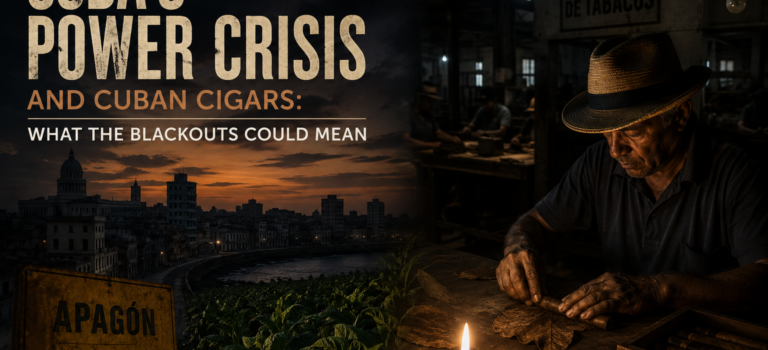
Cuba’s worsening energy crisis is affecting nearly every part of daily life on the island.
In July 2026, Cuba experienced repeated failures of its national electrical grid, leaving millions of people without power. Residents have dealt with prolonged blackouts, water shortages, limited transportation, food spoilage, and interruptions to basic services.
For cigar enthusiasts, this raises an understandable question:
What could Cuba’s power crisis mean for Cuban tobacco and the future availability of Cuban cigars?
There is no simple answer. Cuban cigars are agricultural products made through a combination of natural processes, skilled handwork, careful aging, transportation, storage, and international distribution.
A blackout does not instantly stop every cigar from being rolled.
But when electricity and fuel remain unreliable for weeks or months, pressure can build throughout the entire system.
Cuba’s Energy Crisis Is No Longer a Temporary Problem
Cuba has experienced repeated nationwide blackouts since 2024, but the situation intensified considerably during 2026.
A nationwide grid collapse in early July was followed by another islandwide blackout only days later. Fuel shortages and failures within Cuba’s aging electrical infrastructure have made sustained recovery increasingly difficult.
The human consequences are much more serious than any concern about cigars. Families are struggling to refrigerate food, pump water, use medical equipment, travel to work, and escape extreme heat.
That context matters.
Premium cigars may be one of Cuba’s most recognized exports, but the people who plant, harvest, process, roll, package, transport, and sell those cigars are living through the same crisis.
For current reporting on the scale of the outages, read Reuters’ account of life inside Havana during the energy crisis and the Associated Press report on Cuba’s repeated nationwide blackouts.
Cuban Cigar Production Does Not Begin in a Factory
When people picture cigar production, they often imagine a roller seated at a wooden table inside a Havana factory.
That is only one stage of a much longer journey.
Premium tobacco begins in the fields, where the plants require:
- Prepared soil
- Reliable irrigation
- Continuous attention
- Careful harvesting
- Controlled curing
- Fermentation
- Sorting
- Aging
- Transportation
- Skilled rolling
- Packaging and storage
A Habano can take years to reach the market. According to Habanos S.A., certain tobacco leaves require additional fermentation and extended aging before they are ready to become part of a finished cigar.
That long process gives the industry some protection from a short outage because tobacco and finished cigars already exist in various stages of aging and storage.
The larger risk comes when electrical and fuel shortages persist long enough to interrupt several links in the chain at once.
Where Electricity and Fuel Matter Most
The act of rolling a premium Cuban cigar remains largely manual.
That does not mean the surrounding industry can operate indefinitely without reliable power.
Irrigation and agricultural support
Tobacco plants require careful watering and field management. Electrical interruptions can affect pumps, wells, equipment, and the ability to deliver water where it is needed.
The most important Cuban tobacco regions are agricultural communities, and prolonged rural outages may last longer than those in high-profile parts of Havana.
Curing and processing
Traditional tobacco curing relies heavily on air, time, ventilation, and the experience of farmers rather than industrial machinery alone.
However, modern facilities may still depend on electrical equipment for ventilation, monitoring, lighting, handling, climate control, and other supporting operations.
Fermentation and aging cannot simply be rushed to compensate for lost time. The leaves must progress naturally and be monitored carefully.
Cigar factories
The cigar itself may be rolled by hand, but factories still need lighting, ventilation, communications, sanitation, inventory systems, and dependable working conditions.
Extended outages can shorten workdays, interrupt production schedules, make buildings uncomfortably hot, and reduce the number of people able to travel to work.
Storage
Finished cigars require stable conditions.
Temperature and humidity must be managed carefully so cigars do not dry out, absorb excessive moisture, develop mold, or lose the characteristics created through years of cultivation and aging.
Some storage facilities may have generators or alternative systems. Others may be more vulnerable to extended fuel and electricity shortages.
Transportation and distribution
Fuel may be an even greater problem than electricity.
Tobacco must move from farms to processing facilities. Workers must reach factories. Finished cigars must travel to warehouses, ports, airports, and international distributors.
Even when cigars are ready, unreliable transportation can delay their journey to retailers around the world.
The Habanos Festival Was Already Affected
The energy crisis has moved beyond speculation.
Earlier in 2026, Habanos S.A. postponed its internationally recognized cigar festival as fuel shortages and power disruptions worsened across the country.
The annual event attracts international retailers, collectors, distributors, journalists, and cigar enthusiasts. Its postponement showed that Cuba’s energy and transportation problems had become serious enough to disrupt one of the industry’s most important global gatherings.
The Associated Press reported on the postponement and the wider effects of the fuel crisis.
Postponing a festival is not the same as stopping cigar production. However, it is a visible sign of how deeply the crisis is affecting tourism, transportation, hospitality, and the cigar economy surrounding the product.
Could Cuban Cigars Become Harder to Find?
Possibly—but the effect may not appear immediately.
Cigars currently available in stores may have been harvested, fermented, aged, rolled, packaged, and exported long before the latest grid collapse.
That creates a delay between problems inside Cuba and what consumers eventually see at retail.
The first signs may include:
- Less consistent availability of particular sizes
- Longer restocking periods
- Reduced allocations to some retailers
- Delays in new releases
- Greater difficulty finding highly sought-after brands
- Increased competition among collectors
The impact will probably not be equal across every brand and market.
Larger distributors and high-priority export destinations may receive inventory before smaller retailers. Premium or limited releases may also be handled differently from regular production.
It is too early to say exactly how much current blackouts will affect future cigar supply. Any confident claim that a specific brand is about to disappear would be speculation.
Will Prices Rise?
They could, but shortages are only one influence on Cuban cigar pricing.
Prices can also be affected by:
- International demand
- Currency conditions
- Shipping and insurance costs
- Distributor policies
- Taxes and import duties
- Luxury-market positioning
- Scarcity created by collectors and resellers
If production and transportation decline while global demand remains strong, retailers may receive fewer cigars. Scarcity often places upward pressure on prices, particularly for prestigious marcas and difficult-to-find vitolas.
That does not mean every Cuban cigar will suddenly become unaffordable. It means enthusiasts should expect availability to remain uneven and pricing to vary substantially by country and retailer.
Should Cigar Enthusiasts Start Buying Everything They Can Find?
I would not recommend panic buying.
Fear-driven purchasing can produce inflated prices, encourage questionable sellers, and increase the risk of counterfeit cigars.
A better approach is to:
- Buy from established, authorized, or highly trusted retailers
- Avoid deals that appear too good to be true
- Inspect storage conditions before purchasing
- Keep personal cigars properly humidified
- Explore quality cigars from other producing countries
- Appreciate what you already own rather than treating every cigar as an investment
Cuba has a unique place in cigar history, but the premium cigar world also includes exceptional tobacco and craftsmanship from Nicaragua, the Dominican Republic, Honduras, Mexico, and other regions.
You can explore more of the traditions surrounding the leaf in Cigar Culture: The Best Traditions Around the World.
This Is Also a Story About the People Behind the Cigar
It is easy to discuss Cuban cigars as luxury objects.
The energy crisis reminds us that each cigar begins with people.
Farmers tend the soil and tobacco plants. Workers sort and ferment the leaves. Torcedores and torcedoras transform those leaves into finished cigars. Others inspect, band, box, store, transport, and distribute them.
They are not protected from blackouts simply because the product they help create is sold internationally.
That human connection is one reason ThinkCigar focuses less on assigning scores and more on the culture, traditions, people, and experiences surrounding the cigar.
A premium cigar represents far more than the hour or two during which it is enjoyed.
The ThinkCigar Perspective
Cuba’s power crisis will not erase its cigar tradition overnight.
The country has endured hurricanes, economic upheaval, shortages, political conflict, and decades of changing relationships with international markets. Cuban tobacco culture has survived because of the knowledge passed between generations and the extraordinary value placed on its craftsmanship.
But tradition alone cannot operate irrigation pumps, move workers, preserve storage environments, or transport finished cigars.
If Cuba’s electricity and fuel problems continue, the cigar industry will face the same pressures affecting every other part of the island’s economy.
For enthusiasts, the responsible response is not panic.
It is awareness.
Understand the work behind the cigar. Buy carefully. Store what you own properly. Remain open to premium cigars from across the world. Most importantly, remember that the people behind the product are experiencing consequences far more serious than an empty space on a retailer’s shelf.
That awareness is part of appreciating the larger cigar lifestyle: the history, craftsmanship, places, rituals, and people that give meaning to the leaf.
Make Your Next Cigar More Memorable
The uncertainty surrounding production is another reminder not to save every meaningful cigar for a “perfect” occasion that may never arrive.
Create the occasion.
Choose the right setting. Pour something you enjoy. Invite someone whose company matters—or take an hour of peaceful time for yourself.
Our complimentary ThinkCigar Weekend Ritual Guide offers ideas for creating more memorable cigar experiences through atmosphere, pairings, reflection, and tradition.
You may also enjoy What Makes a Great Cigar Ritual? Here’s What 15 Cigar Smokers Told Me, inspired by real stories shared by members of the cigar community.
Because even when the world around the cigar changes, the moments we create around it can still matter.
It’s a Lifestyle.
About Post Author

