

About twelve years ago, I flew into Buffalo, New York, to wipe data from some government computers.
Not exactly the beginning of a great cigar story.
I was living in Rhode Island at the time. The assignment was for HUD, and getting there meant heading up to Boston, flying out of Logan and landing in Buffalo.
The actual job took about three hours.
Then I had another three hours before I needed to be back at the airport.
Three hours isn’t enough time to really see a city.
But it’s too much time to sit at an airport.
So I did what cigar people do.
I pulled out my phone and searched for the closest cigar shop.
It led me about a mile outside downtown Buffalo to a place called Virgil’s.
I had never been there.
Didn’t know anybody there.
And nobody knew me.
Three Hours in Buffalo
I remember deer heads on the walls.
There was the main showroom and a separate room with a television. It wasn’t some polished luxury lounge designed by a hospitality consultant.
It felt lived in.
Local.
Like the room belonged to the people sitting in it.
I walked in as some guy from Rhode Island with a few hours to kill before his flight.
They welcomed me with open arms.
Somebody ordered pizza.
Then somebody offered me venison from a recent hunt.
Let that sink in for a minute.
I’d flown to Buffalo to erase data from government computers.
A few hours later, I’m sitting in a cigar shop with complete strangers, eating their pizza and being offered somebody’s venison.
It was the highlight of the trip.
I didn’t have a name for what happened that afternoon.
Today I do.
Cigar culture.
So What Is Cigar Culture?
If Google brought you here looking for a definition, here’s mine:
Cigar culture is the community, ritual, history, places, food, drink, travel and human connection that have grown around the cigar.
The cigar is obviously part of it.
But it isn’t all of it.
Sometimes it isn’t even the most interesting part.
I’ve learned that over years of walking into cigar shops and lounges in places where I knew absolutely nobody.
The cigar gets you through the door.
What happens after that is where things get interesting.
Buffalo Wasn’t Supposed to Be the Story
Buffalo probably isn’t the first city most people picture when somebody says cigar culture.
Maybe that’s part of why I remember the afternoon so clearly.
Buffalo has always struck me as a city with some scars on it.
Cold winters. Old industry. Great old buildings. Neighborhoods that have seen better times and neighborhoods fighting their way toward better ones.
And, of course, the Bills.
Buffalo people seem perfectly comfortable suffering together.
Maybe that builds character.
But while working on this story, I discovered something I didn’t know when I walked into Virgil’s.
Buffalo has its own cigar history.
The University at Buffalo’s historical collection contains a photograph from the early 1900s of Joseph Jankowski’s Tobacco Store, home of the “Sobieski Cigar.” A crowd stands outside the shop in the Buffalo snow. The store appears to have been attached to someone’s house.
A cigar shop.
People gathered outside.
Buffalo winter.
More than a century ago.
Some things apparently don’t change very much.
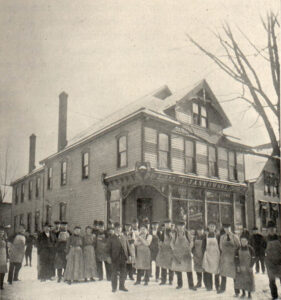
And the cigar culture hasn’t disappeared from Western New York. Buffalo Cigars operates multiple locations in the region, including a downtown shop on Main Street.
I went looking for Virgil’s while writing this article.
I couldn’t find it.
Maybe it closed. Maybe it changed names. Maybe I’m missing something.
If somebody from Buffalo remembers Virgil’s—or knows what became of it—I’d genuinely like to hear from you.
Because somebody there once fed a stranger from Rhode Island pizza and offered him venison.
I haven’t forgotten it.
The Cigar Lounge Is a Strange Little Democracy
Spend enough time in cigar lounges and you’ll notice something.
People talk to each other.
That sounds ridiculously simple until you consider how rarely it happens anymore.
We spend enormous amounts of time staring into phones, filtering ourselves into political camps, professional circles, age groups and economic tribes.
Then you walk into the right cigar lounge.
The guy in the chair beside you might be a surgeon.
Or a truck driver.
A barber.
A judge.
A mechanic.
A retired cop.
A teacher.
A guy between jobs who doesn’t particularly feel like explaining himself today.
Somebody asks:
“What are you smoking?”
And there it is.
Conversation.
Not always profound conversation.
Sometimes it’s sports.
Sometimes politics—which can be dangerous territory.
Sometimes food.
Cars.
Marriage.
Business.
Travel.
Kids.
Music.
Or why the cigar you’re smoking isn’t nearly as good as the guy sitting next to you insists his is.
There are egos in cigar lounges, of course.
We’re still human.
But at their best, these places temporarily flatten some of the divisions we carry around outside.
The cigar becomes common ground.
This Didn’t Start With the Modern Cigar Lounge
The social world around cigars is much older than leather chairs, flat-screen televisions and walk-in humidors.
Go back to late nineteenth- and early twentieth-century Ybor City in Tampa, and cigar culture wasn’t a hobby occupying one storefront.
It helped build a community.
Cuban and Spanish immigrants arrived to work in the cigar industry, followed by Italians, Eastern European Jews, Chinese immigrants and others. The National Park Service’s history of Ybor City describes an unusually diverse community in the American South, built around cigar manufacturing and the businesses, homes, clubs and institutions that grew alongside it.
At its height, thousands of people were connected to Tampa’s cigar industry. The Smithsonian’s history of Tampa’s cigar factories tells the story of an industry that once employed roughly 10,000 rollers working in about 200 factories.
But here’s the part I love.
They had readers.
Imagine Somebody Reading You a Novel While You Roll Cigars
They were called lectores.
Cigar workers would hire someone to sit above the factory floor and read aloud while they worked.
Newspapers.
Political commentary.
Literature.
Novels.
Think about that.
Hands rolling tobacco.
Someone’s voice traveling across the factory floor.
Workers listening to stories and arguments and news from a world beyond the building.
The cigar factory wasn’t merely producing cigars.
Ideas were moving through the room too.
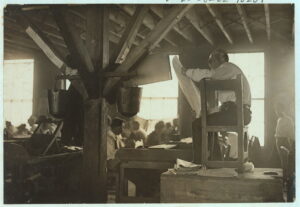
That’s why the lector has always fascinated me. We’ve explored that history elsewhere on ThinkCigar because it represents something much bigger than an interesting cigar fact. Read our story of El Lector and the cigar factory reader.
It tells you that cigar culture has always involved conversation and story.
The cigar was being made while culture was happening around it.
Ritual Matters Too
Ask ten cigar enthusiasts about their ritual and you’ll probably get twelve answers.
Somebody has a favorite chair.
Somebody has a particular cutter.
Someone else has a lighter that apparently possesses supernatural properties and must never be touched by another human being.
There’s the selection.
The cut.
The light.
The first few minutes when everyone decides whether the cigar is going to behave itself.
But ritual isn’t necessarily about being precious or sophisticated.
It’s about intentionally setting aside some time.
That distinction matters.
There is a version of cigar culture that can become painfully concerned with proving who knows the most.
Wrapper.
Binder.
Filler.
Factory.
Vintage.
Country.
Limited release.
Tasting notes containing flavors I’m fairly certain no human being has ever actually eaten.
Hints of antique saddle leather with a whisper of Himalayan nutmeg.
Fine.
If that’s your thing, enjoy it.
But you don’t need a doctorate in tobacco to belong in the room.
Being a Cigar Enthusiast Isn’t a Competition
This may be one of the most important things we’ve learned building ThinkCigar.
You don’t have to know everything.
I certainly don’t.
That’s part of the reason ThinkCigar exists.
I’m still curious.
I still find things I didn’t know.
I still meet people who know more about some corner of this world than I ever will.
And I’d rather ask them a question than pretend otherwise.
A cigar enthusiast isn’t necessarily the person who can identify a wrapper leaf from across the room.
It might simply be the person who understands that there’s a story worth hearing.
Who grew the tobacco?
Who rolled it?
What country did it come from?
Why did cigar factories once employ people to read novels?
Why does one neighborhood in Tampa have a cigar history tied to immigration, labor, politics and Cuba?
Why did a bunch of strangers in Buffalo decide some guy waiting for a flight needed pizza?
Those questions interest me.
Food and Drink Are Part of the Story
Eventually somebody is going to pour something.
Bourbon.
Rum.
Coffee.
Maybe wine.
And sooner or later somebody is going to eat.
That’s another reason we created Smoke, Sip & Savor.
Food, spirits and cigars have their own cultures, but when they meet, something else happens.
The point isn’t simply:
What bourbon goes with this cigar?
Sometimes the more interesting question is:
Where are we? Who made this? Who cooked that? Why do people here drink this? And who are we sharing it with?
That’s the difference between consumption and experience.
One fills an evening.
The other can become a memory.
Travel Changes the Cigar
I’ve become increasingly interested in what happens when you follow the cigar back toward the places and people behind it.
Nicaragua is a perfect example.
It’s easy to look at a cigar band and see a country of origin.
Nicaragua.
One word.
But start pulling on that thread and suddenly you’re dealing with revolution, dictatorship, Cuban exiles, Estelí, agriculture, American business, war and generations of people whose lives became intertwined with tobacco.
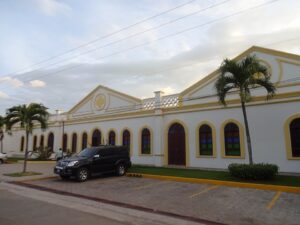
That’s why our ThinkCigar story about Nicaragua’s cigar history became about much more than cigars.
The same thing happens in Cuba.
Miami.
Tampa.
The Dominican Republic.
And eventually other places where the cigar becomes an entrance into entirely different traditions surrounding hospitality, food, spirits, craftsmanship and place.
That’s the world I’m interested in exploring.
Not just:
What are you smoking?
But:
Where did it take you?
Sometimes the Cigar Isn’t the Experience
That afternoon in Buffalo taught me something I didn’t understand until much later.
I don’t remember what cigar I smoked at Virgil’s.
Seriously.
For a man who runs a cigar publication, that’s probably a terrible admission.
I remember the deer heads.
I remember the television room.
I remember the pizza.
I definitely remember being offered venison.
And I remember how people who had absolutely no reason to care whether I enjoyed my three hours in Buffalo made sure that I did.
The cigar?
Gone.
And maybe that’s the point.
Sometimes the cigar isn’t the experience.
It’s the thing that gets you through the door.
The World Behind the Cigar
That’s what we mean at ThinkCigar when we say cigar lifestyle.
It isn’t about convincing everyone to smoke cigars.
It isn’t about pretending every cigar is a luxury object.
And it isn’t about turning cigar knowledge into some private club where newcomers are afraid to ask questions.
It’s about recognizing that behind the cigar is a surprisingly large world.
Farmers.
Rollers.
Lectors.
Immigrants.
Factory owners.
Bartenders.
Chefs.
Lounge owners.
Travelers.
Old friends.
Complete strangers.
And occasionally a guy in Buffalo with extra venison.
The cigar may be what brings everyone into the room.
But the room—the conversation, the meal, the journey, the people and the memory—is what brings them back.
That’s cigar culture.
And that’s the world ThinkCigar exists to explore.
It’s a Lifestyle.
Continue Exploring the World Behind the Cigar
Explore more stories about the people, places, traditions and experiences surrounding cigars in the ThinkCigar Cigar Lifestyle hub.
Travel deeper into food, spirits, destinations and culture with Smoke, Sip & Savor.
Explore the extraordinary history of the people who once read newspapers and novels aloud over cigar factory floors in our story of El Lector.
And follow the cigar into revolution, dictatorship and exile in our exploration of Nicaragua’s cigar history.
ThinkCigar Media
It’s a Lifestyle.
The world behind the cigar.
About Post Author

